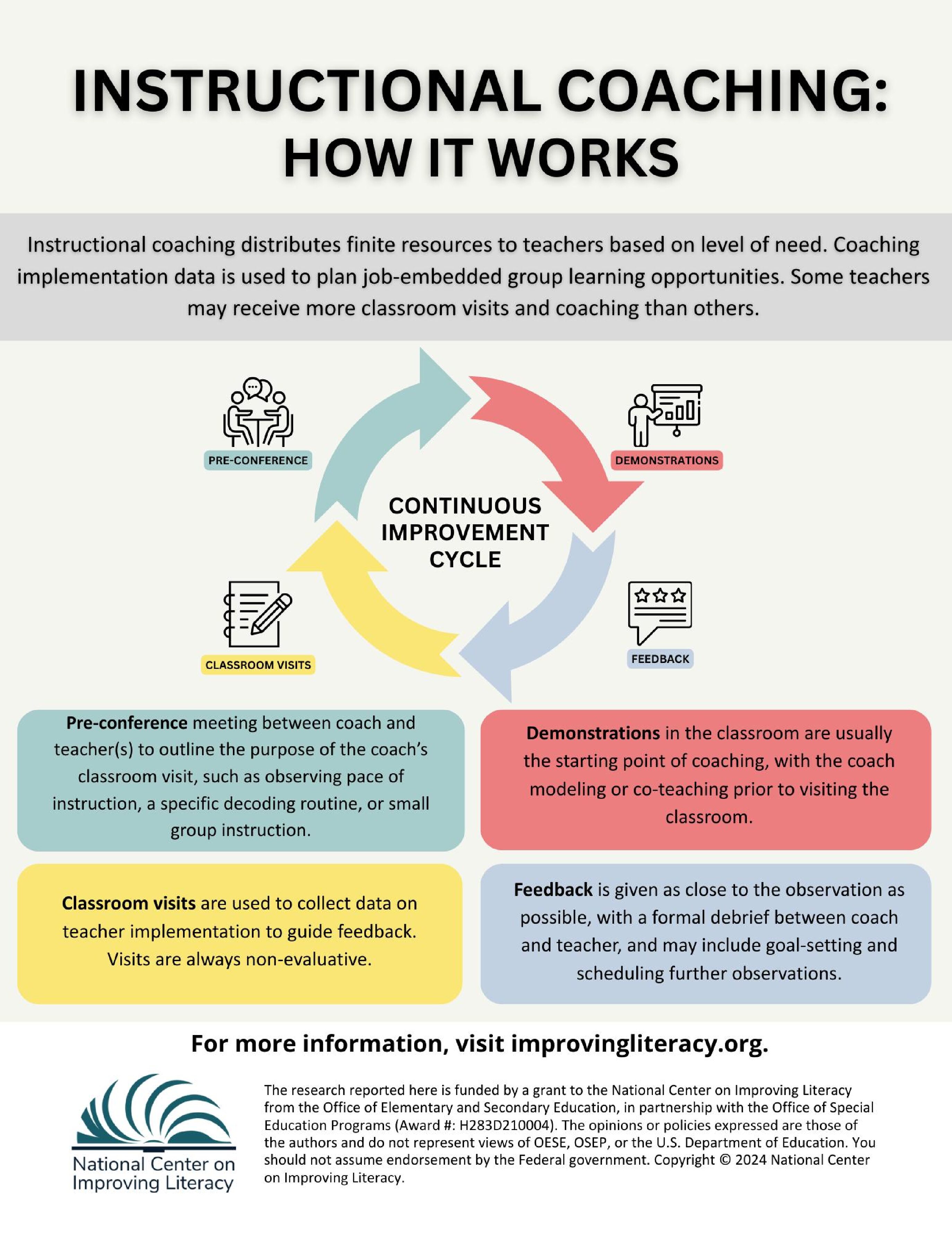
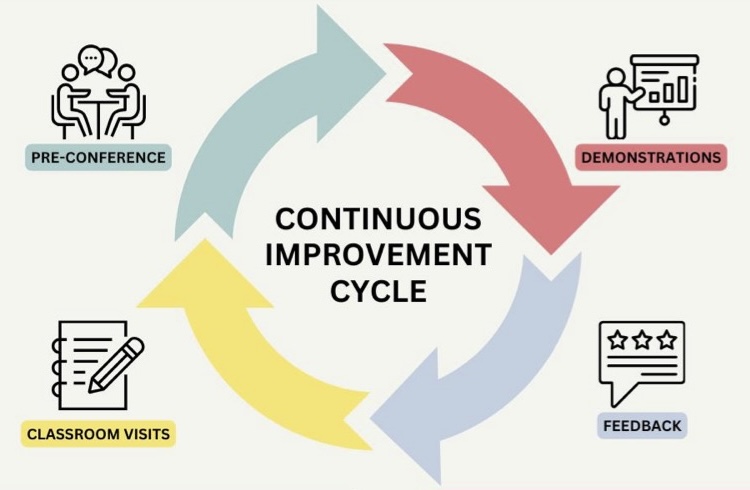
Instructional coaching distributes finite resources to teachers based on level of need. Coaching implementation data is used to plan job-embedded group learning opportunities. Some teachers may receive more classroom visits and coaching than others. See a breakdown of the steps below with accompanying documents to help scaffold your work with instructional coaches.
Pre-conference
Pre-conference meeting between coach and teacher(s) to outline the purpose of the coach’s classroom visit, such as observing pace of instruction, a specific decoding routine, or small group instruction.
Demonstrations
Demonstrations in the classroom are usually the starting point of coaching, with the coach modeling or co-teaching prior to visiting the classroom.
Demonstration Lesson Focus Form
Feedback
Feedback is given as close to the observation as possible, with a formal debrief between coach and teacher, and may include goal-setting and scheduling further observations.
Instructional Coach Feedback Form
Classroom Visits
Classroom visits are used to collect data on teacher implementation to guide feedback. Visits are always non-evaluative.
Putting it All Together
To support implementation of this cycle in day-to-day practice, the Weekly Coaching Plan helps instructional coaches intentionally organize their time across schools, teachers, and stages of the improvement process. Used consistently, the plan supports equitable allocation of coaching resources, protects time for high-leverage practices, and helps coaches, leaders, and educators stay aligned around purposeful, sustained continuous improvement.